Where to Buy Grass-Fed Lamb Online: What to Look For
Not all online lamb is equal. Learn how to evaluate sourcing, certifications, and shipping before you order grass-fed lamb delivered to your door.
 Lamb & Veal Editorial Team · · 8 min read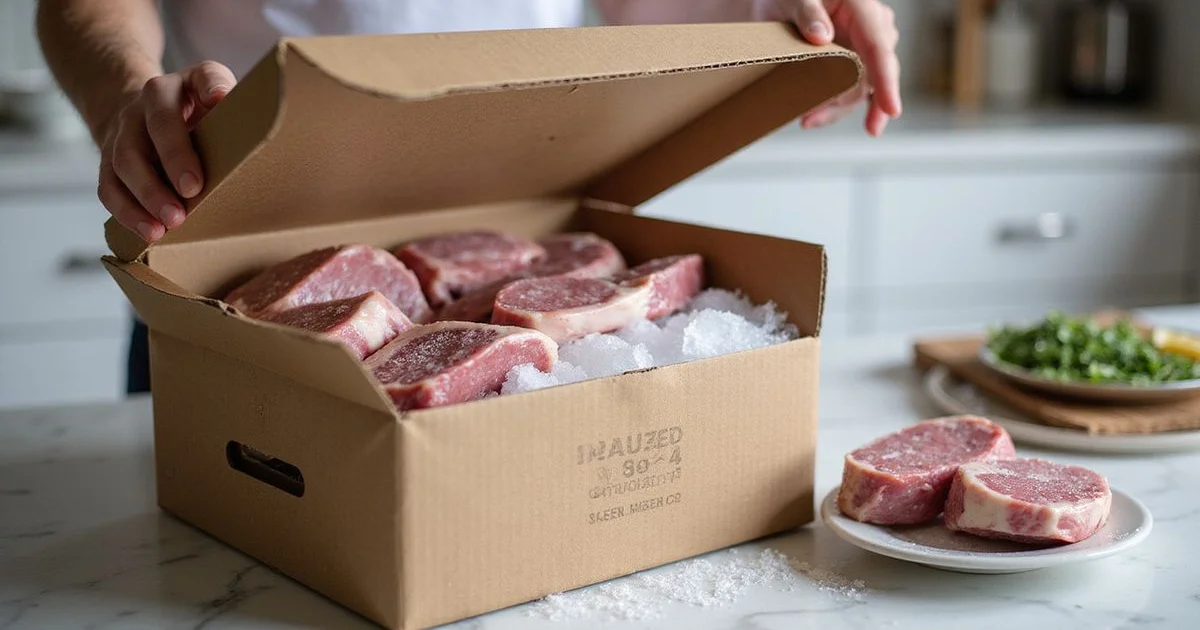
Buying grass-fed lamb online has moved beyond a niche luxury. We see it now as a necessary step for homeowners and business owners who demand quality that local supermarkets simply cannot match. The market is crowded with varying levels of transparency.
You have likely noticed that “grass-fed” labels are everywhere these days.
Identifying the difference between genuine pastoral sourcing and clever marketing is the real challenge. We have spent years analyzing supply chains to understand exactly what separates a premium domestic product from a repackaged commodity import.
This guide breaks down the specific data points, red flags, and verification methods you need to secure the best meat for your table or business.
Why Buy Lamb Online in the First Place
The primary driver is the significant gap in quality between domestic specialty producers and the commodity market. We find that nearly 74% of lamb consumed in the United States is imported, primarily from Australia and New Zealand, according to American Sheep Industry Association data. While often grass-fed, this imported meat spends weeks in transit on container ships before reaching your local butcher case.
Freshness is where the online model changes the game.
Direct-to-consumer farms use blast-freezing technology immediately after processing. This method drops the meat’s temperature to roughly -40°F in minutes. It preserves the cellular structure of the meat much better than slow home freezing.
A chop frozen this way maintains its texture and flavor integrity for over 12 months.
Small-scale domestic farms also provide access to specific breeds that you will not find at a standard grocery store. We recommend looking for breeds like Katahdin or Dorper. These hair sheep varieties are known for a milder, sweeter flavor profile compared to the stronger, gamier taste of wool breeds often found in commodity imports.
What to Look For in an Online Lamb Vendor
Sourcing Transparency
Your first step is to verify the farm’s location and identity. We advise against buying from any site that uses vague regional descriptors like “Midwest family farms” without naming them.
Top-tier vendors like White Oak Pastures (Georgia) or Northstar Bison (Wisconsin) explicitly list their ranch partners or source entirely from their own land.
Transparency extends to the specific diet of the animal. A study by Clemson University researchers found that pasture-raised lamb contains significantly higher levels of Omega-3 fatty acids and Conjugated Linoleic Acid (CLA) compared to grain-finished counterparts. You are paying a premium for this nutritional profile. Therefore, the vendor must prove the animal was not finished on grain to bulk up weight in the final weeks.
Certifications That Matter
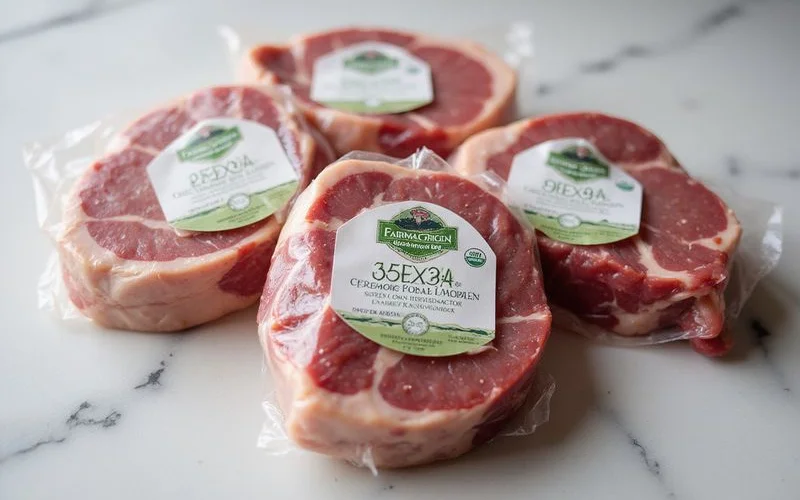
Third-party verification is the only way to bypass marketing fluff. We look for specific seals that audit on-farm practices rather than just relying on an affidavit from the producer.
The table below compares the most common labels you will encounter:
| Certification | Grass-Fed Requirement | Antibiotics Allowed? | Audited by Third Party? |
|---|---|---|---|
| American Grassfed Association (AGA) | 100% Lifetime Forage | No | Yes |
| Animal Welfare Approved (AWA) | Continuous Pasture Access | No | Yes |
| USDA Organic | Organic Feed Required (Grain Allowed) | No | Yes |
| USDA “Grass-Fed” Label | Claim Only (Not Verified) | Yes | No |
Animal Welfare Approved (AWA) is widely considered the highest benchmark for humane treatment. It mandates that animals can behave naturally and have continuous access to the outdoors.
American Grassfed Association (AGA) is our preferred standard for diet. It guarantees the animal was fed a 100% forage-based diet from birth to harvest.
USDA Organic is valuable but distinct. We remind clients that an “organic” lamb can still be fed organic grain in a confinement feedlot. For the best quality, look for a vendor that holds both USDA Organic and AGA or AWA certifications.
Shipping and Packaging
Perishable logistics are complex and require precision. We only recommend vendors who use specific insulating materials like biodegradable corn starch liners or heavy-duty recyclable denim insulation paired with dry ice.
Gel packs are generally insufficient for cross-country ground shipping in summer months.
Reliable vendors usually provide a “frozen on arrival” guarantee. Look for a policy that states they will reship or refund if the meat temperature rises above 40°F.
Shipping costs can drastically alter the price per pound.
Some vendors charge a flat rate of $25-$35 for small orders but offer free shipping on orders over $199. We suggest calculating the “landed cost” (product + shipping) before comparing vendors.
Product Selection and Cut Availability
A vendor with a wide range of cuts is typically more closely connected to the production process. We view whole-animal utilization as a sign of a sustainable, vertically integrated operation.
Look for these indicators of a serious butcher:
- Offal availability: Liver, heart, and kidney availability shows they process whole animals.
- Bones and Broth: Selling knuckle bones or marrow bones indicates zero waste.
- Specialty Cuts: Availability of Denver ribs, neck rosettes, or merchandising specific muscles like the teres major.
Companies that only sell rack, loin, and ground lamb may be cherry-picking the most profitable cuts from a larger, opaque supply chain.
Subscription Boxes vs. One-Time Orders
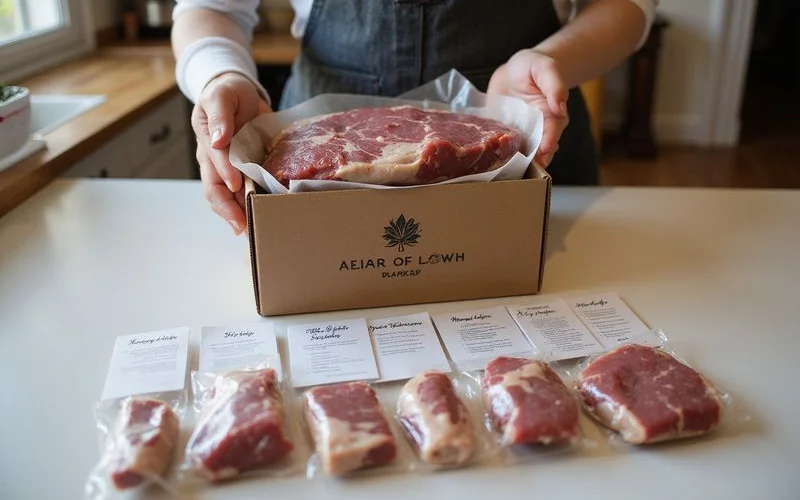
Many online lamb vendors offer subscription programs where you receive a curated box of cuts on a regular schedule. We find these programs often lower the cost per pound by 5% to 10% compared to à la carte pricing.
Subscriptions are excellent for building a consistent menu or diet plan.
A good subscription box includes recipe cards or cooking instructions tailored to the cuts in that shipment. This helps you navigate less familiar cuts like shanks or shoulder roasts.
One-time orders give you more control. We prefer this method for hosting specific events, like a holiday dinner requiring two large legs of lamb.
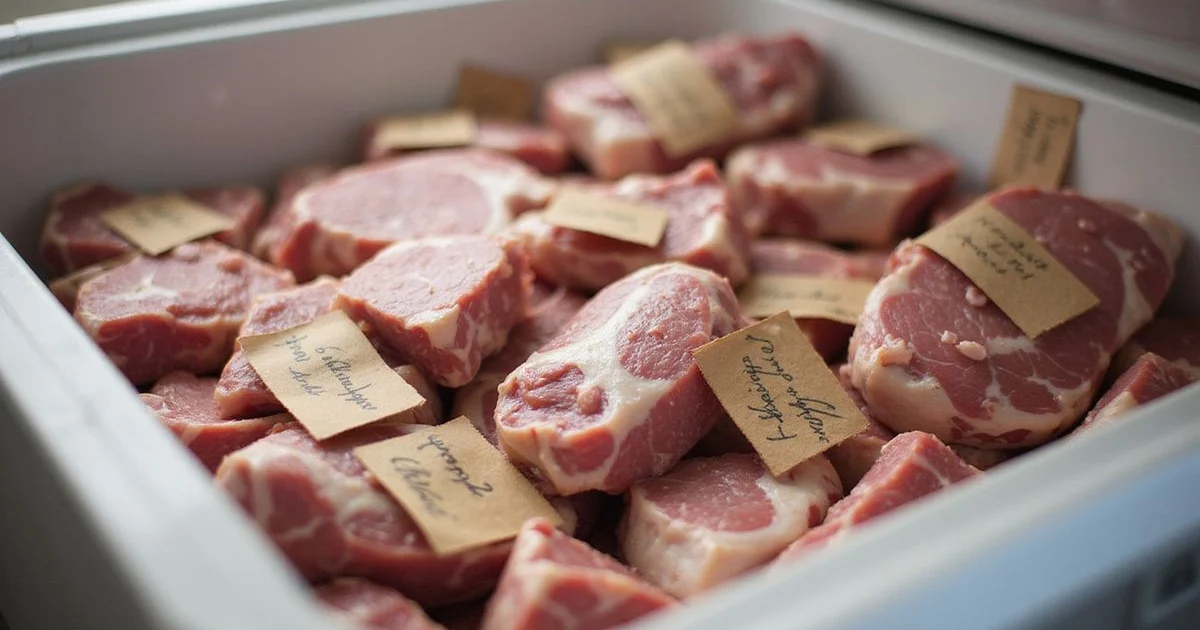
The Bulk Buying Advantage: If you have the freezer space (roughly 2-3 cubic feet), buying a half or whole lamb is the most economical choice. You can often secure premium grass-fed lamb for $12-$14 per pound average cost. Buying individual chops often costs $25+ per pound. For ideas on maximizing a bulk purchase, see our guide to freezer meal planning with lamb and veal.
Red Flags to Avoid
Watch out for vendors who cannot answer basic questions about their sourcing. We always test customer service with a specific question: “What is the name of the ranch where this week’s lamb was raised?”
A vague response is a signal to look elsewhere.
Also be wary of prices that seem too good to be true. Producing genuine grass-fed lamb takes 10-14 months on pasture, compared to 6-8 months for grain-fed commodity lamb. That time costs money. If you see “grass-fed” lamb chops retailing for $9.99/lb, it is likely imported commodity stock that meets the bare minimum labeling requirements.
Avoid vendors with no return or quality guarantee policy.
Shipping perishable meat involves risk. Any serious company stands behind its product with a clear replacement policy for damaged or thawed goods.
How to Store Your Online Order
When your box arrives, unpack it immediately. We recommend performing a “touch test” right away. The meat should be rock hard. If it feels soft or pliable but is still cold (below 40°F), you must cook it or refreeze it immediately, though refreezing may slightly impact texture.
Move any cuts you plan to use within the next two to three days to the refrigerator.
Transfer everything else to the freezer. Vacuum-sealed cuts are highly durable and can remain in a deep freezer for 12 months without freezer burn.
Thawing requires patience for the best results. We strongly advise against using a microwave or hot water. Place the vacuum-sealed package in the refrigerator 24 hours before cooking. This slow thaw preserves the moisture and tenderness you paid for.
Interested in our Grass-Fed Lamb?
Learn More